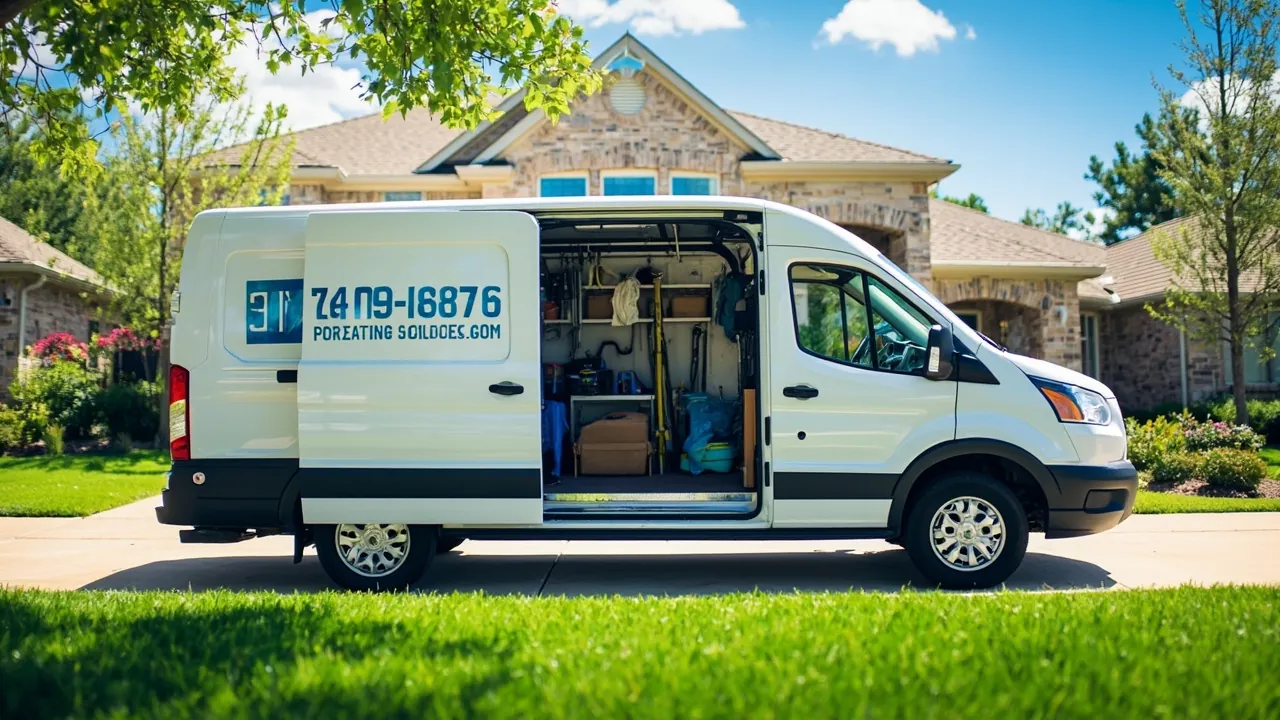
It's a Monday evening in June. A homeowner in Plano, Texas finally finishes dinner, looks around the living room, and decides she's done pretending she can keep up with the cleaning herself. She Googles "house cleaning service near me," finds three companies with good reviews, and starts calling. The first one goes to voicemail. She hangs up and dials the second. Voicemail again. The third picks up on the second ring. She books a quote for Thursday morning. The first two companies never know she called.
That's the quote-call problem in residential cleaning. Most cleaning companies don't lose customers because their work is bad. They lose them because the phone rings at 7 PM while the owner is elbow-deep in a move-out clean, and the person on the other end hangs up before the voicemail greeting finishes playing.
Spring and summer are when this hurts the most. Residential cleaning call volume spikes 30-50% from March through August, driven by spring cleaning season, families preparing for summer, and new move-ins. Average job tickets range from $130 for a standard clean to $400+ for a deep clean, and a loyal recurring customer is worth $3,000-$5,000 a year. NextPhone's analysis of 347,000 inbound calls across service businesses found that 28.5% of all calls arrive after hours - and the vast majority of those reach voicemail and are never returned.
Let's walk through what a cleaning company's call flow actually looks like, what changes when an AI receptionist picks up, and the math on what each missed quote call is really worth.
What does a missed cleaning quote call actually cost?
More than the first job. Here's why.
1. The caller has already decided to hire someone. A homeowner who picks up the phone to call a cleaning service at 7 PM on a Monday has already had the conversation with themselves. They've looked at the dust on the baseboards, checked the budget, searched Google, read the reviews, and narrowed it to 2-3 companies. They're not shopping. They're ready to book. The first company that picks up and can schedule a quote or a first clean usually wins the business. Smith.ai's research on missed sales calls shows that 62% of customers who reach voicemail call the next business on their list within 10 minutes, and 80% of those never come back to the first one.
2. The recurring revenue is the real prize. A one-time deep clean is $300-$450. But the real money in residential cleaning is the recurring contract: weekly, biweekly, or monthly service at $130-$200 per visit. A biweekly customer at $160 per visit is worth $4,160 a year. Over a typical 3-year customer relationship, that's $12,000+ from a single phone call that landed well. Industry pricing data from Archer Cleaning and major cleaning franchises puts the average customer lifetime value of a residential recurring account at $8,000-$15,000 depending on service frequency and home size.
3. The caller isn't leaving a voicemail. When a homeowner with a dirty house and a credit card ready gets your voicemail, they don't leave a message. They hang up and call the next number on the list. Smith.ai's voicemail abandonment data shows that 80% of callers who reach voicemail don't leave a message at all. For a cleaning company taking 20-30 calls a week in peak season, that's 16-24 hang-ups per week - a number that, if even a third convert to recurring customers, represents the bulk of the year's growth walking out the door.
Why do cleaning companies miss so many quote calls?
Three structural problems stack up, and they're all worse during peak season:
1. The owner is the cleaner. The majority of residential cleaning companies in the U.S. are owner-operators with 1-4 employees. The owner is often the one doing the cleaning, which means they're in a client's home with gloves on and a vacuum running when the phone rings. They can't answer. They tell themselves they'll call back during the drive to the next job, but by then the lead is 90 minutes old and the caller has already booked with someone else. ServiceTitan's call booking study found that residential service businesses with 5-14 techs book between 24% and 59% of inbound calls. For solo and two-person cleaning operations, the booking rate is even lower - many report under 25% during business hours.
2. After-hours calls are the best calls. Homeowners don't call cleaning services at 10 AM on a Wednesday. They call after work, after dinner, and on Saturday morning when they're home and looking at the mess. NextPhone's 347,000-call dataset shows that 28.5% of all service-business calls arrive after hours. For a cleaning company doing 25 calls a week, that's roughly 7 calls a week - 30 a month - that arrive when nobody's available to answer. These are the highest-intent calls: the caller is home, they're looking at the problem, and they're ready to book.
3. The callback window is brutally short. In cleaning, a callback within 2 hours is often already too late. The homeowner called 3 companies in a row. The one that answered booked the quote. By the time the first company calls back at 9 PM, the customer has already scheduled the first clean and doesn't want to deal with canceling and rebooking. The "I'll call them back later" approach quietly kills the growth of otherwise good cleaning companies. The leads don't go cold - they go to the competitor who picked up.
Citation capsule: The U.S. residential cleaning services market is worth over $20 billion annually and growing 6-7% per year, driven by dual-income households, aging homeowners, and the post-pandemic emphasis on sanitization, per IBISWorld's 2026 maid services report. There are over 875,000 cleaning businesses in the U.S., and the vast majority are small operations with under 5 employees. The demand is there. The question is whether you're the one answering when it calls.
What changes when an AI receptionist picks up the phone?
Let's walk through a real June week at a two-person cleaning company in Plano. The owner, Sofia, runs the business with one full-time cleaner. She averages about 28 calls a week in spring, climbing to 40+ per week in summer. Before VoxPro: calls forward to her cell during business hours (which she often can't answer because she's cleaning) and go to a generic voicemail after 6 PM and on weekends. She checks voicemail in the evening, calls back the next morning, and estimates she books about 6 new recurring customers a month. She knows she's losing calls but doesn't know how many.
After VoxPro: the same forwarding number, but the AI receptionist answers first. It picks up in under two rings, 24/7, and asks the right questions for a cleaning company: what type of service (one-time deep clean, recurring weekly/biweekly, move-in/move-out, post-construction), approximate square footage, number of bedrooms and bathrooms, when the customer would like the first clean, and the best callback number. It captures the lead in a clean format and either books the first clean directly into Sofia's calendar or texts her the lead details within 60 seconds.
| Call type | What the AI does | Time to book |
|---|---|---|
| New recurring customer (weekly/biweekly) | Qualifies the home (beds/baths/sqft), books the first deep clean, sets the recurring schedule, texts Sofia the full lead details and confirmation | Under 3 minutes |
| One-time deep clean / move-out | Captures the address, date needed, scope (appliances, windows, etc.), texts Sofia the job details for a quick quote back | Under 2 minutes |
| Existing customer reschedule | Pulls up the account, finds the next available slot in Sofia's schedule, texts the customer a confirmation | Under 90 seconds |
| Spanish-speaking caller | Handles the entire intake in Spanish, then dispatches to Sofia with the lead details in English | Under 3 minutes |
Notice what's not on that list: voicemail. The AI doesn't drop the caller into a mailbox. It engages, qualifies, captures, and books. If the customer explicitly asks for a human, the AI can warm-transfer to Sofia mid-call - and if Sofia can't pick up, the AI takes a structured message with all the details Sofia needs to call back and close.
This pattern is proven. ServiceTitan's case study on AI voice agents in field service shows an 80% booking rate as a frontline call taker with only a 30% escalation rate to a human. The mechanics translate directly to cleaning: a fast, friendly voice picks up, asks the right qualifying questions, and books the appointment. Most callers don't need a 10-minute conversation - they need their cleaning need acknowledged, a date on the calendar, and a confirmation text. The AI does that in under three minutes, at any hour.
What is the real ROI for a cleaning company using AI?
Let's run the numbers, because this is where it stops being a feature list and becomes a budget conversation.
Sofia's cleaning company was averaging about 28 calls per week in spring 2026. Of those, roughly 11 were missed (a 39% miss rate, split between in-the-field, after-hours, and weekend calls). After turning on VoxPro in late May, the miss rate dropped to under 5% - the remaining misses are mostly spam and wrong numbers. That's roughly 9 additional answered-and-qualified calls per week.
| Metric | Before AI (April) | After AI (June) |
|---|---|---|
| Weekly inbound calls | 28 | 36 (call volume rose with better pickup and faster booking) |
| Missed calls per week | 11 | 1-2 |
| Quote/first-clean bookings per week | 8 | 24 |
| New recurring customers per month | 6 | 19 |
| One-time cleans per month | 14 | 32 |
| Average recurring contract value (annual) | $3,600 | $3,800 (better-qualified leads, larger homes) |
| Average one-time clean | $285 | $310 (more deep cleans, fewer basic tidies) |
| New monthly recurring revenue | $1,800 | $6,016 |
| One-time revenue per month | $3,990 | $9,920 |
| Total monthly revenue lift | - | +$10,146/month over baseline |
The cost of the AI: roughly $200-$250/month for a cleaning company's call volume, including bilingual support and 24/7 coverage. The math is straightforward. For every dollar Sofia spent on AI receptionist coverage, she booked $40-$50 in additional monthly revenue in the first 30 days. The AI paid for itself before lunch on day one.
And cleaning customers are the stickiest customers in home services. A homeowner whose quote call gets answered at 7 PM on a Monday, books the first clean for Thursday, and is happy with the result stays on the recurring schedule for years. The ROI isn't just the first $285 deep clean - it's the $3,600-a-year recurring contract, year after year, that the voicemail was quietly losing to the competitor who picked up.
What should you do about missed cleaning quote calls?
Three steps, in order of impact:
- Audit your current miss rate. Pull your phone logs for the last 30 days. Count inbound calls, answered calls, and voicemails. Most cleaning company owners are shocked to see the actual numbers. If your miss rate is above 20%, you're leaving real money on the table every month.
- Stop the voicemail bleed now. Every call that hits voicemail during business hours, after hours, or on weekends is a customer who's calling your competitor next. An AI receptionist picks up in under two rings, 24/7, qualifies the lead, and books the appointment - so you never lose another call to voicemail again. See VoxPro pricing and setup.
- Set up lead capture and follow-up. Even the calls that don't book on the spot should be captured with name, number, service type, and preferred date. Text the customer a confirmation immediately, and text yourself the lead details so you can follow up within the hour. The AI does all of this automatically - no CRM setup, no spreadsheet, no sticky notes on the dashboard of the work van.
The cleaning companies that grow are the ones that answer the phone. Every missed call this week is a recurring customer you'll never get back. Get started with VoxPro and start capturing every quote call, day or night.
Sources
- AI Receptionist Statistics: 347K Calls Analyzed - NextPhone, 2026.
- Finding the Best Solution to Stop Missing Sales Calls - Smith.ai, 2025.
- The Professional Way to Answer the Phone for Small Business - Smith.ai, 2025.
- Call Booking Rates Data for Residential Service Businesses - ServiceTitan, 2025.
- AI Voice Agent Case Study: Superior Plumbing - ServiceTitan, 2025.
- Maid & Maid Services Industry Report - IBISWorld, 2026.
- What Is the Average Cost of House Cleaning? - Archer Cleaning, 2025.