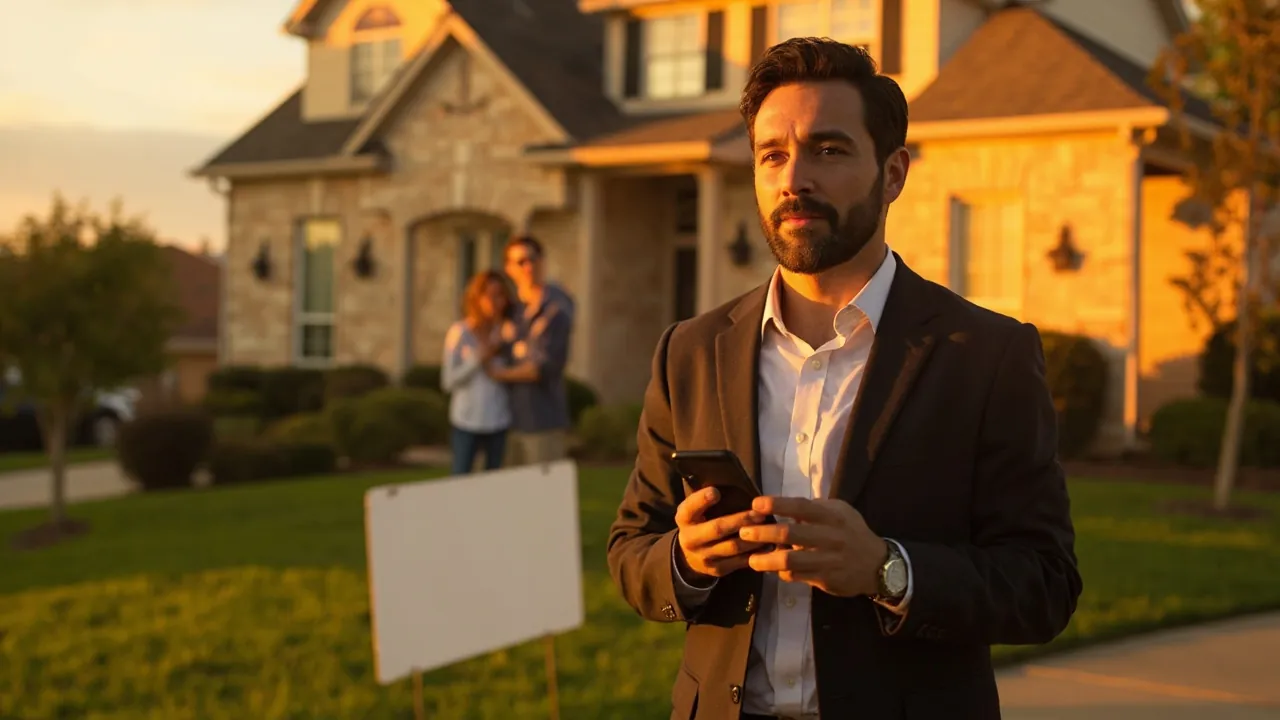
A serious buyer does not wait for your office hours. She calls at 7:42 PM from the passenger seat while her spouse is driving past a house in Plano. The listing is perfect: right school zone, right price band, right yard. She wants to know if the agent can show it tomorrow before lunch.
Your phone rings while you are inside another showing. You silence it because you are standing in the kitchen with clients. Ten minutes later, you check the missed call. No voicemail. By then, she has called the next agent on Google, and that agent has the showing booked for 10:30 AM.
Real estate has always been relationship-driven, but the first relationship moment is usually a phone call. The question is not whether you are a good agent. The question is whether the lead got a fast, useful answer before they moved on.
Why after-hours calls matter so much in real estate
Most buyers search at night because that is when they are done with work, kids, dinner, and commute. Sellers call at night because they finally had time to talk with their spouse about moving. Investors call early because they are driving neighborhoods before the workday starts. None of those moments line up neatly with 9 to 5.
The National Association of REALTORS' Profile of Home Buyers and Sellers keeps showing the same basic pattern: buyers use the internet heavily, but they still rely on agents to interpret listings, schedule access, negotiate, and get the transaction across the finish line. That means the online search usually turns into a call, text, or form fill when the buyer wants action.
NextPhone's analysis of 347,000 inbound calls across service businesses found that 28.5% of inbound calls arrive after hours and 51.2% of calls are real leads. Real estate agents feel that pattern every week. The lead is not always ready to sign a buyer agreement on the first call, but they are ready to take the next step: ask about a showing, confirm a neighborhood, get a valuation range, or find out whether you handle their type of property.

What a missed call actually costs an agent
The painful part is that most missed real estate calls never look like lost revenue. They look like nothing. The caller did not leave a voicemail. The phone log only shows an unknown number. Your CRM never created a lead. There is no lost-deal report because the deal never entered your pipeline.
But the math is simple. If your average buyer-side commission is $8,000 to $12,000, one missed qualified buyer can pay for years of phone coverage. If your average listing is $450,000 and your side of the commission is 2.5% to 3%, one seller consultation that never gets booked can be an $11,000 to $13,500 miss before brokerage split and expenses.
That does not mean every missed call is worth five figures. Some are vendors, spam, agents asking about access, or neighbors who are not ready. The problem is that your phone system cannot tell the difference if nobody answers. The valuable call and the junk call both disappear into the same voicemail box.
| Call type | What the caller needs | Why voicemail loses it |
|---|---|---|
| Buyer driving by a listing | Showing availability, price context, next open slot | They call another agent who can answer now |
| Seller considering a move | A valuation consult and a quick sense of your process | The emotional window closes before the next morning |
| Relocation lead | Neighborhood guidance, school zone context, schedule coordination | They are often calling multiple agents in one evening |
| Investor lead | Fast property info and follow-up on criteria | Speed is part of the value proposition |
| Existing client | Status update, inspection time, title question, closing reminder | Silence creates anxiety and more follow-up calls |
What should an AI receptionist ask on the first call?
A real estate AI receptionist should not sound like a call center script. It should sound like a sharp assistant who knows what information the agent needs before calling back.
For a buyer, VoxPro can capture name, phone, email, desired area, price range, financing status, timeline, must-haves, and the specific property address or MLS link they are asking about. If your calendar is connected, it can offer a showing window or buyer consult time. If the request is urgent, it can text you a clean summary right away.
For a seller, it can capture the property address, timeline, reason for moving, estimated condition, whether they have talked to another agent, and the best time for a valuation consult. It can also explain what happens next in plain English: you will review the property, prepare a valuation range, and call back at the scheduled time.
For existing clients, it can route by transaction stage. Inspection question? Send it to the agent and transaction coordinator. Appraisal update? Capture details and send it to the right thread. Showing feedback? Log it and notify the listing agent. The point is not to replace your judgment. The point is to stop making every caller wait for your next free minute.

The before-and-after call flow
Before VoxPro, the agent's day is a constant tradeoff. Answer the phone and interrupt the showing, or protect the showing and miss the call. Take the seller call at dinner, or let it go to voicemail and hope they leave a message. Call back tomorrow, then spend the first ten minutes rebuilding context because the lead barely remembers which property they called about.
After VoxPro, the call is answered in a consistent, useful way. The AI greets the caller, understands whether they are buying, selling, renting, investing, or checking on an existing transaction, and asks the next logical questions. It can book a consult, collect showing preferences, text a confirmation, and send the agent a summary that is useful enough to act on.
Practical example: A relocation buyer calls at 8:18 PM asking about three homes near Frisco ISD. VoxPro captures their budget, desired move date, must-have commute, lender status, and showing availability. It books a 15-minute buyer consult for the next morning and texts the agent: "Relocation buyer, $650K-$750K, needs Frisco ISD, pre-approved, wants Saturday showings." The agent wakes up to a real appointment, not a mystery missed call.
Why this is not just another answering service
Traditional answering services can take a message, but real estate leads need structured intake. "Someone called about a house" is not enough. You need to know which house, what price band, whether they are pre-approved, when they want to see it, and whether they already have an agent.
Per-minute answering services also get expensive when call volume spikes. EverHelp's 2026 answering service pricing guide shows traditional services often price by minute, with overages and add-ons for extended coverage. That model is awkward for agents because the busiest weeks are also the weeks when every call matters most.
VoxPro is built for the outcome, not the message. Answer the call. Qualify the lead. Book the next step. Text the summary. Keep the agent focused on the appointment already in front of them.
How to set this up without making your phone feel robotic
Start with the five call paths that cover most of your business:
- New buyer lead asking about a property or area.
- New seller lead asking for valuation or listing help.
- Existing client asking for transaction status.
- Another agent asking about showing access or offer instructions.
- Vendor, lender, title, inspector, or wrong-number routing.
Then write the handoff rules. A hot seller lead gets texted immediately. An existing client with a deadline gets escalated. A buyer who is not represented gets offered a consult. A caller who already has an agent gets politely routed to the listing instructions. The AI should know when to book, when to collect details, and when to hand off.
Finally, test it during the hours when you currently miss the most calls: evenings, weekends, while you are in showings, and during closing-week chaos. Do not judge it by whether it sounds like a receptionist from 1998. Judge it by whether you wake up to better summaries, fewer mystery numbers, and more appointments on the calendar.
The agent still matters. The missed call does not.
Real estate clients hire judgment, negotiation, local knowledge, and calm under pressure. VoxPro does not replace any of that. It protects the moment before your expertise can be used.
If you are already good at converting leads once you talk to them, the fastest growth lever may be simpler than a new ad campaign: stop letting warm callers hit voicemail. See VoxPro pricing or read how it works to decide whether 24/7 call coverage belongs on your real estate line this month.
Sources
- Highlights From the Profile of Home Buyers and Sellers - National Association of REALTORS.
- Quick Real Estate Statistics - National Association of REALTORS.
- AI Receptionist Statistics: 347K Calls Analyzed - NextPhone, 2026.
- Answering Service Pricing in 2026 - EverHelp, 2026.