Why towing calls are different from every other service call
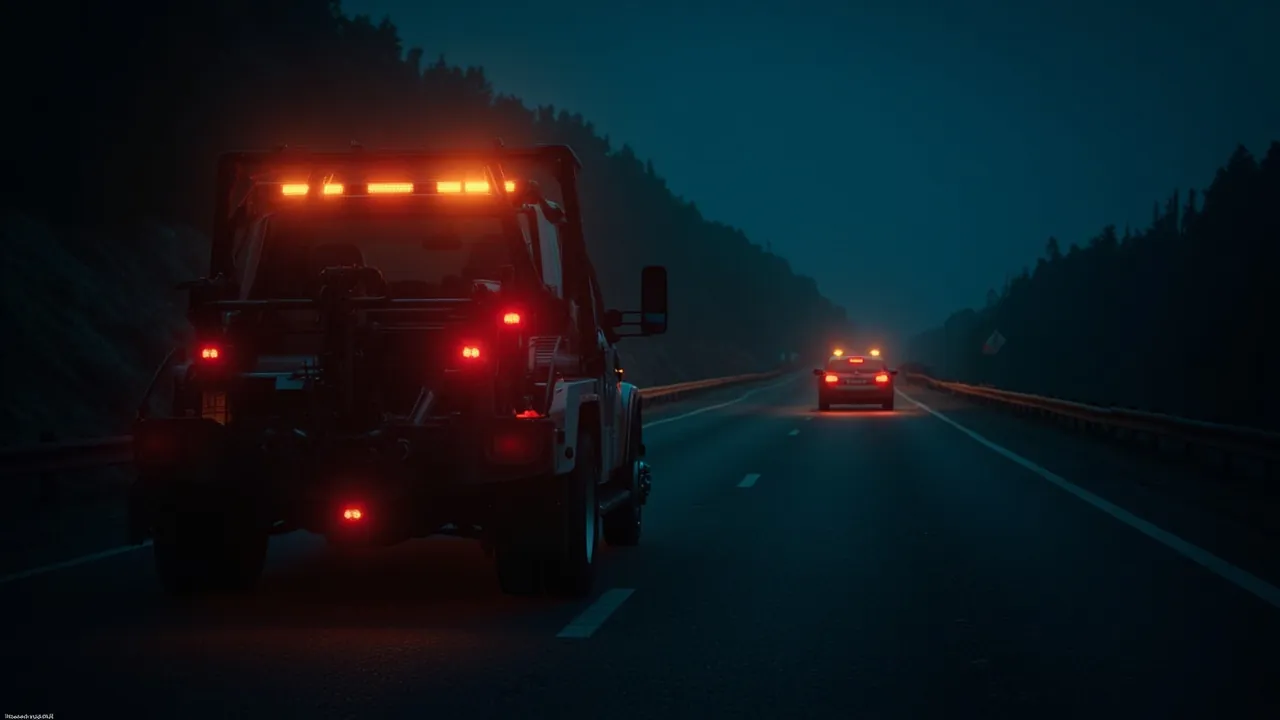
When a homeowner's AC dies at 10 PM, they're uncomfortable. When a driver's car breaks down on I-35 at 10 PM, they're stranded on the shoulder with traffic blowing past at 70 mph. That call isn't a quote request. It's an emergency, and the caller has zero patience for voicemail.
Towing and roadside assistance is one of the most time-sensitive service industries in the country. The average driver who needs a tow will call two to three companies in rapid succession. The first one that answers and gives a clear ETA gets the job. Everyone else gets a hang-up and a "they never called me back" story they'll tell their friends.
According to the IBISWorld towing industry report, the U.S. towing market generates over $11 billion annually across roughly 48,000 businesses. Most of those businesses are small: two to five trucks, one office line, and an owner who's often out on a call when the phone rings.
The math on a missed tow call
Here's what a single missed call actually costs a towing company.
| Call type | Average ticket | Frequency (monthly) | Missed rate | Monthly lost revenue |
|---|---|---|---|---|
| Local tow (under 10 miles) | $125 | 60 calls | 35% | $2,625 |
| Long-distance tow | $350 | 20 calls | 30% | $2,100 |
| Lockout / flat tire / jump | $85 | 40 calls | 40% | $1,360 |
| Accident recovery | $475 | 12 calls | 25% | $1,425 |
| Total | 132 calls | $7,510 |
That's $7,510 per month in calls that go to voicemail, get a busy signal, or ring with no answer. Over a year, that's $90,000 in revenue walking to the next company on Google Maps. And unlike a missed haircut appointment, a missed tow call almost never comes back - the driver is in crisis mode and will take whoever picks up first.
When the phone actually rings
Towing calls don't follow a neat 9-to-5 pattern. They cluster around the hours when people are driving most: morning commute (6-9 AM), evening commute (4-7 PM), and late night (10 PM - 2 AM). The late-night window is where most small towing companies lose the most money, because that's when the owner is either on another call or asleep.
Here's a typical Tuesday night for a two-truck operation:
- 9:15 PM - Driver calls about a flat tire on the highway shoulder. Owner is hooking up a car from a fender bender. Phone goes to voicemail. Driver calls the next company.
- 11:40 PM - College student locks keys in their car at a gas station. Nobody answers. They call a friend with a Slim Jim instead.
- 1:20 AM - A rideshare driver gets rear-ended and needs a tow. The dispatch line rings six times and hits voicemail. They call AAA.
Three calls, three lost jobs, $400+ in revenue gone in one night. Multiply that by four or five nights a week and you see why a two-truck towing company can hemorrhage $7,000-$10,000 a month without ever realizing it.

Why most towing companies can't just "answer the phone"
The standard advice is deceptively simple: just pick up. But towing companies face a structural problem that most service businesses don't.
Your drivers are on the road. When they're hooking up a car, they can't answer. When they're navigating a dark highway shoulder, they shouldn't answer. And when they're backing a flatbed into a tight apartment complex at 1 AM, they definitely can't answer.
Hiring a dispatcher for overnight shifts costs $15-$20 per hour, or roughly $2,400-$3,200 per month for coverage from 6 PM to 6 AM. For a small towing company running on 15-20% margins, that's a significant overhead increase just to catch calls that may or may not come in. Most owners do the math and decide to "just let it ring" - not realizing they're leaving far more money on the table than the dispatcher would cost.
Traditional answering services are another option, but they come with their own problems. They charge by the minute, which means a five-minute call to get location details and dispatch a truck can cost $8-$12. They don't know your fleet, your rates, or your coverage area. And callers can tell they're talking to a call center, which erodes trust at the exact moment they need to feel confident about who's coming to help them.
What changes when an AI receptionist answers
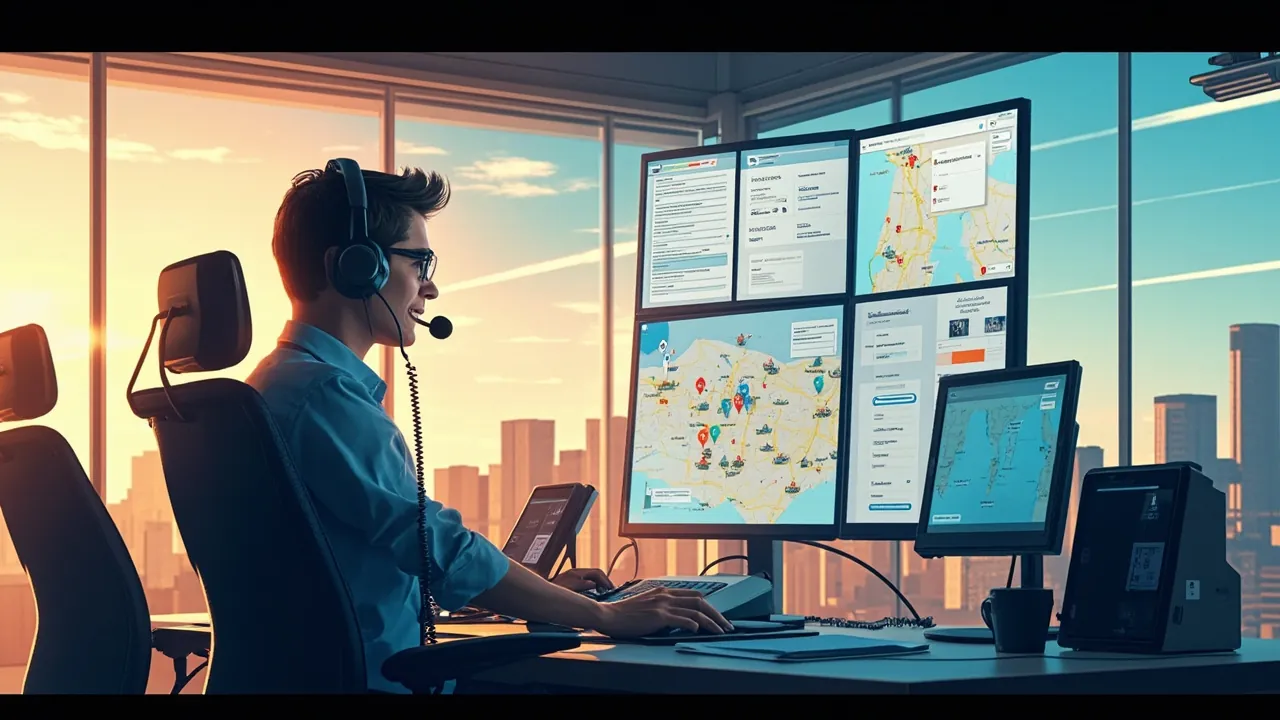
An AI receptionist solves the core problem: it answers every call, on the first ring, 24 hours a day. No hold music. No "your call is important to us." No voicemail.
Here's what a typical AI-handled tow call looks like from the driver's perspective:
"Thanks for calling Mike's Towing. I can help you right now. What's your situation - do you need a tow, a jump start, a tire change, or help with a lockout?"
"I need a tow. My car died on the shoulder of I-35 near exit 42."
"Got it. What's the make and model of your vehicle? And can I get your name and phone number so our driver can reach you when they're close?"
[Caller provides details]
"Perfect. I've got all the details. A driver should be there in about 25 to 30 minutes. You'll get a text confirmation with the ETA. Stay safe and keep your hazards on."
The caller hangs up knowing someone is on the way. The owner gets a text with the location, vehicle details, and callback number. The dispatch happens automatically. Total time: under two minutes.
The breakdown: what AI captures that voicemail doesn't
| What the caller needs | Voicemail | AI receptionist |
|---|---|---|
| Immediate answer | No - rings out or goes to voicemail | Yes - answers on first ring, 24/7 |
| Location captured | Maybe - if they leave a message | Always - asked during the call |
| Vehicle details | Rarely | Collected every time |
| Callback number | Sometimes | Automatic via caller ID |
| Dispatch notification | None until owner checks messages | Instant text to owner/driver |
| Caller confidence | Low - left a message, no ETA | High - knows someone is coming |
| Conversion rate | 15-20% (callback rate) | 85-90% (booked on the spot) |
The conversion rate gap is where the real money is. When a stranded driver leaves a voicemail, there's only a 15-20% chance they'll still be waiting by the time you call back. When an AI answers immediately and books the call, the conversion rate jumps to 85-90%. That's not a marginal improvement - it's the difference between a profitable month and a break-even one.
What it looks like on the business side
Here's what a typical week looks like for a three-truck towing company before and after adding an AI receptionist:
| Metric | Before AI | After AI |
|---|---|---|
| Calls answered | 65% | 100% |
| Jobs booked per week | 28 | 41 |
| Average ticket | $195 | $195 |
| Weekly revenue | $5,460 | $7,995 |
| Monthly missed-call loss | $7,510 | $0 |
The numbers don't require any creative interpretation. Answering 100% of calls instead of 65% means booking 13 more jobs per week. At $195 average per job, that's $2,535 more per week, or roughly $10,000 more per month. The AI receptionist costs a fraction of that.
The after-hours advantage
Towing is one of the few industries where the most valuable calls happen when nobody's watching. A 1 AM accident recovery at $475 is worth nearly four times a 2 PM local tow. But it's also the call most likely to hit voicemail.
According to NHTSA traffic crash estimates, roughly 40% of fatal crashes occur between 9 PM and 6 AM. While not every late-night call involves a fatality, the data confirms that driving risk - and therefore tow demand - spikes after dark. The companies that answer those calls capture the highest-margin work in the industry.
An AI receptionist doesn't sleep. It doesn't take breaks. It doesn't get tired of answering the same questions. At 2 AM on a Saturday, it's just as sharp and professional as it is at 2 PM on a Tuesday. That consistency is what turns after-hours calls from a liability into a revenue stream.
Beyond the tow: capturing the full call
Not every roadside call is a tow. A significant portion - often 30-40% - are smaller services that add up fast:
- Lockouts: Average ticket $65-$85. High volume, especially at bars, movie theaters, and shopping centers after closing time.
- Flat tires: Average ticket $75-$100. Often quick jobs if the driver has a spare.
- Jump starts: Average ticket $50-$70. Dead batteries spike in winter and during heat waves.
- Fuel delivery: Average ticket $65-$90. Drivers who run out of gas are embarrassed and want help fast.
These smaller jobs are easy to miss because they come in at odd hours and seem low-priority. But a company that books 15 lockouts and 10 jump starts per week at an average of $75 each is adding $1,875 in weekly revenue from jobs that would otherwise go to voicemail. That's $7,500 per month from the calls most owners dismiss as "small stuff."
What to look for in an AI receptionist for towing
Not every AI phone system is built for the towing industry. Here's what matters:
- Location capture: The system needs to ask for a cross-street, highway exit, or landmark. "I'm on the road" isn't enough to dispatch a truck.
- Vehicle details: Make, model, color, and whether the car is drivable. This determines whether you send a flatbed or a wheel-lift.
- Service type routing: Tow, lockout, jump, tire, fuel - each requires different equipment. The AI needs to ask and categorize correctly.
- Instant dispatch notification: The owner or driver needs a text or call with all the details the moment the call ends. Not five minutes later.
- Bilingual support: In Texas and across the Sun Belt, 20-30% of roadside callers speak Spanish as their first language. A system that can't handle both languages is leaving calls on the table.
- After-hours pricing awareness: Many towing companies charge a premium for calls after 10 PM. The AI should be able to quote that rate or at least mention it, so there are no surprises when the driver arrives.
The ROI, plain and simple
A two-to-five truck towing company that misses 35% of its calls is losing $7,000-$10,000 per month in revenue. An AI receptionist that costs a flat monthly rate - typically $199-$399 depending on call volume - pays for itself with the first two or three recovered calls. Everything after that is pure margin.
The math gets even better when you factor in lifetime value. A driver you rescue at 1 AM on a Tuesday remembers your name. They save your number. They call you first next time, and they tell their friends. In an industry where word-of-mouth and Google reviews drive 60-70% of new business, every answered call is a future repeat customer.
If your towing company is still relying on voicemail after hours, you're not just missing calls. You're handing your competitors the most profitable jobs in the business.
Ready to stop losing roadside calls? See how VoxPro works for towing companies, or talk to us about setting it up for your fleet.
Sources
- Towing Industry Market Research Report - IBISWorld, 2026.
- 2023 Traffic Crash Data Estimates - National Highway Traffic Safety Administration, 2024.
- AAA Towing and Roadside Assistance Overview - American Automobile Association, 2026.
- Automotive Repair and Maintenance Services - U.S. Bureau of Labor Statistics, 2026.