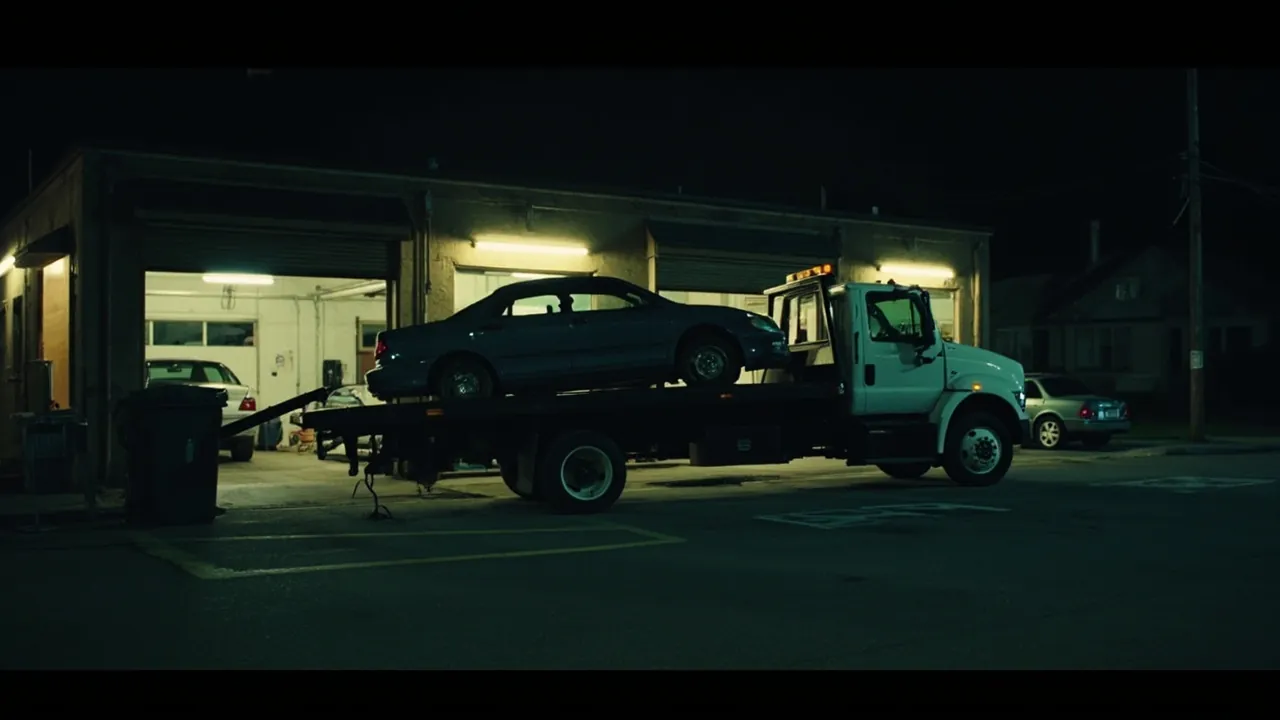
It is 8:30 on a Tuesday night. A sedan has overheated on the highway, the driver has called a tow truck, and the nearest repair shops are closed. The driver is not asking for a final diagnosis. They need to know whether your shop can accept the vehicle, where the tow operator should leave it, how to secure the keys, and when someone will call in the morning.
That call is the beginning of a repair order. But at many independent shops, it rings four times and lands in voicemail. The driver cannot wait for a callback because a tow truck is charging by time and needs a destination now. The next shop that answers usually gets the vehicle.
This is a different problem from roadside dispatch or mobile repair. The tow company handles transportation. Your shop needs to handle intake. A well-designed AI receptionist can do that after hours without pretending to diagnose the car or promise a repair price.
Why the after-hours tow call is unusually valuable
A routine price shopper may call several shops over a few days. A driver with a disabled vehicle makes a decision in minutes. The car is already immobilized, the tow is already on the way, and the customer needs a real destination before the truck leaves the roadside.
Call data analyzed by NextPhone found that 28.5% of inbound business calls arrive after hours. That percentage matters even more for auto repair because breakdowns do not follow service-advisor schedules. Cooling-system failures, dead alternators, no-starts, and warning lights happen on commutes, weekend trips, and late-night drives.
The opportunity is not just the first repair. A shop that handles the stressful first interaction clearly can become the customer's regular maintenance shop. The value comes from winning trust while the customer is deciding where the vehicle will physically go.
| Caller situation | What they need now | What the shop can safely promise |
|---|---|---|
| Vehicle is already on a tow truck | Drop-off approval and instructions | Location, key-drop process, and morning callback window |
| Vehicle will not start at home | Whether the shop accepts tow-ins | Intake details and a service-advisor follow-up |
| Warning light or overheating | Safe next step | Recommend parking if unsafe and arrange shop intake, without diagnosing |
| Customer has an existing appointment | After-hours drop-off instructions | Confirm the appointment and collect where the vehicle and keys will be left |
The voicemail problem is not a callback problem
Shop owners often assume a service advisor can return the call at 7:30 the next morning. For an ordinary maintenance question, that may work. For a tow-in, the customer needs an answer before the tow operator asks, “Where are we taking it?”
Voicemail asks the caller to wait while the vehicle, tow truck, and storage decision are moving in real time. Even a polite recording cannot confirm that the lot is accessible, explain the overnight key drop, or collect the details that make the vehicle identifiable in the morning.
The best after-hours flow does not imitate a mechanic. It removes uncertainty. The caller should finish knowing that the shop has their name, number, vehicle, current location, tow status, symptoms in their own words, and preferred callback time.
What a good after-hours intake should collect
Good intake is structured. The goal is not to interrogate a stressed driver. It is to ask the few questions that let the tow arrive safely and let the morning team open a useful repair order instead of starting from zero.
- Customer identity: full name, mobile number, and the best way to send confirmation.
- Vehicle identity: year, make, model, color, and license plate when available.
- Current situation: whether the vehicle is roadside, at home, or already loaded on a tow truck.
- Customer's description: what happened, which warning lights appeared, and whether the vehicle can move under its own power.
- Tow details: towing company name, estimated arrival, and whether the driver needs gate or drop instructions.
- Key location: secure key-drop instructions and how the keys will be labeled.
- Morning expectation: the earliest realistic time a service advisor will review the intake and call back.
The receptionist should repeat the critical details before ending the call. A wrong plate number or unclear key location creates avoidable confusion at opening. A short confirmation text gives the customer a written record and lets the morning team see exactly what was communicated.
What the AI receptionist should never promise
Auto repair calls carry safety and authorization risks. The AI receptionist should stay inside a clear boundary: intake, routing, scheduling, and approved shop information. It should not diagnose a mechanical problem, estimate a repair it cannot inspect, authorize a tow charge, or promise same-day completion.
The Federal Trade Commission's auto repair guidance tells consumers to ask for a written estimate and understand what work is being authorized. An after-hours flow should support that process, not bypass it. Collect symptoms now, then let a qualified service advisor discuss diagnostic fees, estimates, and repair authorization after the vehicle is inspected.
“I can help get the vehicle checked in for an overnight drop. A service advisor will inspect the intake in the morning and call you before any repair work is authorized.”
A safe, useful after-hours response
Urgent safety language also needs a rule. If the caller describes smoke, fire, leaking fuel, a crash in an active lane, or anyone in danger, the receptionist should tell them to move to safety when possible and contact emergency services. It should not continue a routine booking script while a hazard is unfolding.
A practical call flow from breakdown to repair order
The best workflow connects the phone call to the shop's morning operations. Answering the phone is only step one. The details must reach the right person in a format they can act on.
| Step | Customer experience | Shop result |
|---|---|---|
| 1. Answer immediately | Caller reaches a calm voice instead of voicemail | The shop stays in the decision |
| 2. Identify tow status | Caller explains whether the car is loaded, waiting, or at home | The flow branches to the right instructions |
| 3. Collect vehicle and symptoms | Caller gives concise details once | A structured intake reaches the service team |
| 4. Give approved drop instructions | Customer and tow operator know where to go | The vehicle and keys arrive in the right place |
| 5. Confirm next contact | Customer receives a text and callback window | The morning advisor has a clear follow-up task |
VoxPro can route the completed intake by text, email, or the shop's existing lead workflow. If the caller is an existing customer, the receptionist can capture that too. If the shop has multiple locations, it can route by tow location, service capability, or the branch accepting overnight vehicles.
Design the rules before you turn on 24/7 answering
The technology is the easy part. The useful work is deciding what your shop wants the receptionist to say in common situations. A fifteen-minute setup conversation can define the boundaries.
- Which locations accept unattended tow-ins?
- Is the lot open, gated, or accessible only to approved tow companies?
- Where is the secure key drop, and how should keys be labeled?
- Which makes, vehicle sizes, or repair categories does the shop not service?
- What is the honest morning callback window?
- Who receives urgent notifications, and which calls can wait in the normal queue?
- When should the caller be transferred to a human on call?
Those answers become the call policy. They keep the receptionist specific to your shop instead of using generic promises that create trouble later.
Make the morning handoff feel intentional
The customer should not have to repeat the whole breakdown story when the shop opens. Put the overnight intake in the same place the service team already checks, with the callback task assigned to a named advisor. The record should show when the vehicle arrived, where it was left, where the keys are, what the customer reported, and what the receptionist promised.
Then make the first morning call specific: “We have your gray 2019 Accord and your keys. You reported overheating and a coolant warning. We are checking it into the diagnostic queue now.” That opening proves the overnight conversation reached a real workflow. It also creates a cleaner moment to explain diagnostic charges, timing, and authorization.
If the vehicle did not arrive, the advisor can follow up before the lead goes cold. A quick message asking whether the customer still needs a tow destination can recover jobs that were delayed overnight.
Measure booked tow-ins, not just answered calls
An answer rate tells you whether the phone was picked up. It does not tell you whether the workflow produced repair opportunities. Track the number of after-hours calls, completed tow-in intakes, vehicles that arrived, repair orders opened, and customers who approved work.
A simple monthly review can show where the flow breaks. If many callers complete intake but vehicles do not arrive, review the drop instructions. If vehicles arrive but advisors cannot reach customers, improve phone-number confirmation. If the same question triggers frequent transfers, add an approved answer to the call policy.
Start with the calls you are already missing. You do not need a new phone number or a separate after-hours answering service. VoxPro can answer when your team is busy or closed, collect the repair intake, and hand the morning staff a clean next step. See VoxPro pricing or compare the approach with a traditional answering service.
Sources
- AI Receptionist Statistics: 37 Data-Backed Insights - NextPhone, updated 2026. Based on 1,446,980 business calls across 2,074 businesses.
- Auto Repair Basics - Federal Trade Commission. Guidance on estimates, authorization, and repair-shop communication.