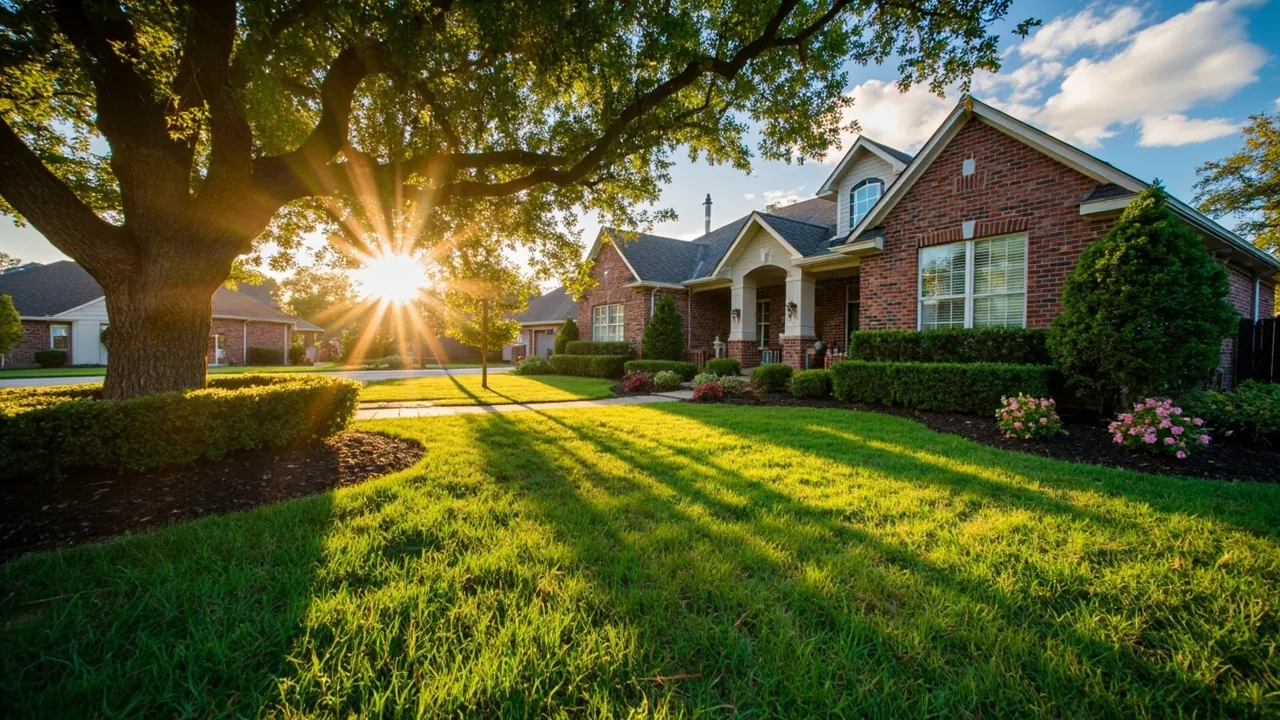
It's a Tuesday night in July. Maria has been staring at her backyard all day. The St. Augustine is patchy in the corners. The flower beds have been "next weekend" for two months. Her neighbor just had the same yard redone by a company whose truck she saw at the house two doors down, and they did beautiful work.
She pulls up the website, finds the number, and dials at 8:47 PM. She gets a generic voicemail with no mention of when anyone will call back. She hangs up. She doesn't leave a message. She Googles "landscaper near me," scrolls to the second result, calls that number, gets a human in two rings, and books a site visit for Thursday. That first company lost a $3,800 job to voicemail. The owner will never know it happened.
That's the quote-call problem in landscaping. Most landscaping companies don't lose jobs because their work is bad. They lose jobs because the phone rings while the crew is 40 minutes deep into a backyard with mowers running, and the person on the other end hangs up before voicemail finishes.
Summer is when this hurts the most. Residential landscaping call volume spikes 40-60% from May through August, and average job tickets climb with it - $1,800-$2,500 for a fresh mulch and hedge install, $3,500-$6,000 for a partial re-landscape, $8,000-$15,000 for a full backyard redesign. ServiceTitan's call booking study found that residential service businesses with 5-14 techs book between 24% and 59% of inbound calls - the rest go to voicemail. For solo and two-truck landscape operators, the booking rate is even lower.
Let's walk through what a summer day actually looks like, what changes when an AI receptionist picks up the phone, and the math on what a missed quote call is worth.
What does a landscaping quote call actually cost when you miss it?
It's worth more than the average ticket. Here's why.
1. The caller has already done the shopping. A landscaping quote call from a homeowner in June has usually been preceded by 2-3 weeks of thinking, a Google search, a check of reviews, and at least one comparison call to a competitor. They're not tire-kicking. They've decided to get this done, and they're calling 2-3 landscapers for a site visit. The contractor who picks up first - and can book the site visit on the call - usually wins the job. Smith.ai's research on missed sales calls shows that 62% of customers who reach voicemail call the next business on their list within 10 minutes, and 80% of those never come back to the first one.
2. The average ticket is high, and the upside is recurring. A standard residential mulching and hedge job runs $1,500-$2,500. A full front-yard refresh with new plantings, edging, and a stone walkway runs $4,000-$8,000. A complete landscape renovation runs $10,000-$25,000. And unlike a one-off repair job, a residential landscape customer is recurring: a typical full-service lawn care contract is $300-$600 per visit, every 2-3 weeks, May through October. A single quote call that lands well can be worth $3,000 in year-one work and $6,000-$9,000 per year after that. Lawn & Landscape Magazine's industry data puts the average customer lifetime value of a residential full-service landscaping account at $14,000-$22,000 over five years.
3. The caller isn't leaving a voicemail. When a homeowner with a $4,000-$8,000 project on their mind gets your voicemail, they don't leave a detailed message. They might leave a one-word message with their name, or they might just hang up. Smith.ai's voicemail abandonment research shows that 80% of callers who reach voicemail don't leave a message at all. For a landscaping company taking 25-40 calls a day in peak summer, that's 20-32 hang-ups per day - a number that, if even a third convert to booked site visits, represents a substantial share of the year's revenue walking out the door.

Why do landscaping companies miss so many quote calls in summer?
It's the same structural problem every field-service business has, made worse by the season. Three things stack up:
1. Crews are in the field, not by the phone. A two-truck landscape outfit in midsummer runs both trucks six days a week, often 7 AM to 6 PM. The foreman in the front yard running a wheelbarrow of mulch isn't going to pick up a call from a stranger asking for a quote on a backyard renovation. The crew member on the mower isn't going to take an unscheduled call about hedge trimming. By the time anyone checks the phone, it's after 6 PM, the call is four hours old, and the customer has already moved on. ServiceTitan's research on the trades shows that small landscape and lawn operators typically book under 30% of inbound calls during business hours - the rest go to voicemail or are returned hours later, when the customer is no longer waiting.
2. After-hours calls are the highest-value calls. Homeowners don't call landscapers at 10 AM on a Tuesday. They call after work, after dinner, and on Saturday morning when they're in the yard thinking about the project. NextPhone's analysis of 347,000 inbound calls found that 28.5% of all service-business calls arrive after hours - and that 99% of those reach voicemail and are never returned. For a landscaping company doing 30 calls a day in summer, that 28% is roughly 9 calls a day, or 270 a month, that never reach a human. Multiply that by an average ticket of $2,500 and a 50% close rate on calls that do get answered, and the math starts to look like a small truck payment.
3. The follow-up game is brutal. Landscaping is one of the few trades where a "callback within 2 hours" is already too late. By the time the owner gets to a missed call at 6:30 PM, the homeowner has called two more companies and booked a site visit with the first one who answered. Even if the callback lands, the caller often doesn't pick up - they're at dinner, or with the kids, or already in bed. The next morning the lead is cold, and by Wednesday the deal is gone. The "just call them back" instinct doesn't work in landscaping, because by the time you call, the buyer has already bought.
Citation capsule: The U.S. landscaping services industry generates more than $129 billion in annual revenue and employs over 1.2 million people, per IBISWorld's 2026 landscaping services report. The residential segment - which is the bulk of the quote-call problem - is on track to grow 5-7% annually through 2028, driven by aging homeowners, a rebound in discretionary home improvement, and a surge in new suburban construction. That growth is a tailwind for every small operator in the market. The question isn't whether the calls are coming. The question is whether you're going to be the one to answer them.
What changes when an AI receptionist picks up the phone?
Let's walk through a real July afternoon at a hypothetical two-truck landscaping company in Frisco, Texas. The owner, Diego, runs the business with one full-time foreman and a 2-person crew. He averages about 32 calls a day in June and 45 calls a day in July. Before VoxPro: a forwarding number that rang his cell during business hours and went to a generic voicemail after 6 PM and on weekends. The voicemail was checked the next morning, and the response time on a callback averaged 5-7 hours. He estimates he books about 11 quote appointments a week, mostly from calls that land on his cell while he's between jobs.
After VoxPro: the same forwarding number, but the AI receptionist answers first. It picks up in under two rings, 24/7, and asks the right questions for a landscaping company: what kind of work, residential or commercial, approximate square footage, when the homeowner would like the site visit, and the best callback number. It captures the lead in a clean format and either books the site visit directly into Diego's calendar (with his preset "site visit slot" windows) or texts him the lead details within 60 seconds.
| Scenario | What the AI does | Time to dispatch |
|---|---|---|
| New quote request (residential landscape, mulch, install, design) | Books a 30-45 minute site visit slot, confirms the address, texts the customer a confirmation with Diego's name and the visit window | Under 3 minutes |
| Existing customer / schedule a recurring service | Pulls up the account on file, books the next visit, sends updated text confirmation | Under 2 minutes |
| Emergency (downed tree, storm damage, irrigation leak) | Texts Diego immediately, offers to stay on the line, books a same-day or next-morning priority slot | Under 2 minutes |
| Spanish-speaking caller, any of the above | Handles the entire intake in Spanish, then dispatches to Diego in English with the lead details | Under 3 minutes |
Notice what's not on that list: leaving a voicemail. The AI doesn't drop into a generic mailbox. It engages, qualifies, captures, and books. If the customer explicitly asks for a human, the AI can warm-transfer to Diego or his foreman in the middle of the call.
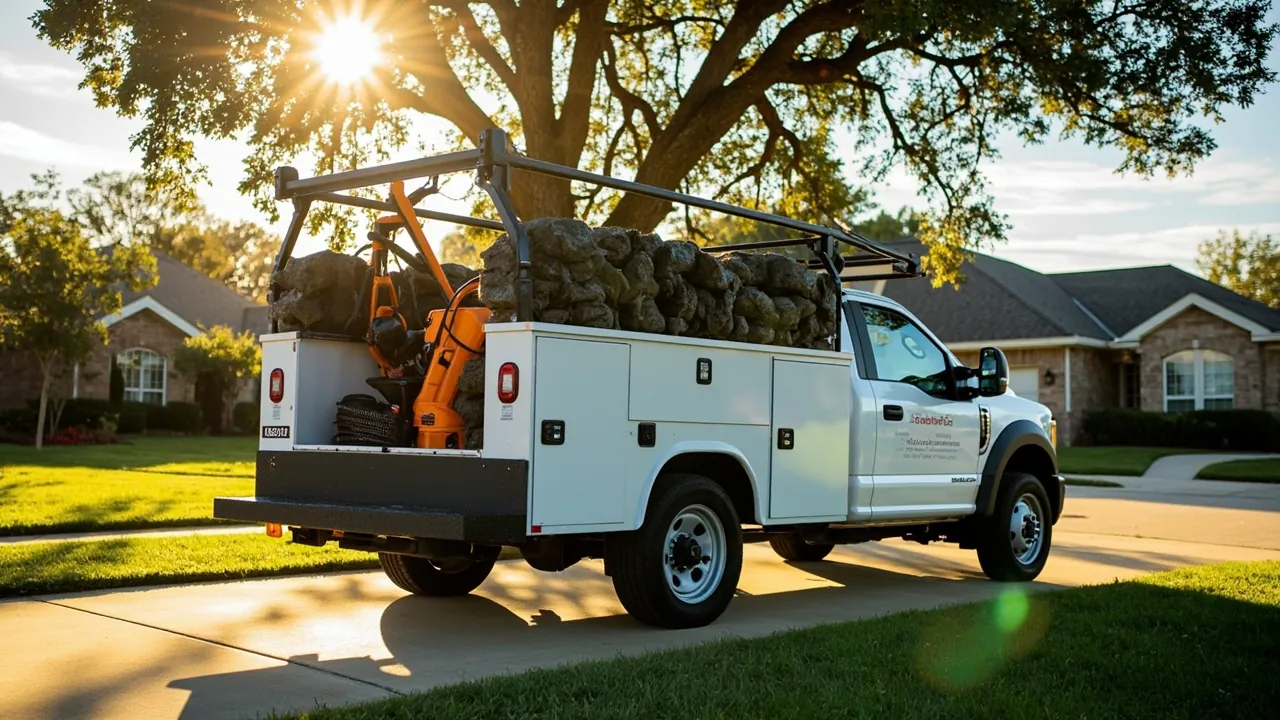
This pattern isn't hypothetical. ServiceTitan's Superior Plumbing case study - a different trade, but the same call-flow problem - shows an AI voice agent hitting 80% booking rate as a frontline call taker with only a 30% escalation rate to a human. The mechanics translate directly to landscaping: a fast, friendly voice picks up, asks the right questions, and books the appointment. Most callers don't need (or want) a long human conversation - they need their project acknowledged, a time on the calendar, and a confirmation text. The AI does that in under three minutes. The voicemail does none of that, ever.
Citation capsule: "If we can improve call booking rates by 10%, that typically means we can also increase revenue by about 10%, and often means we can actually increase profit by more than 10%," says Ara Mahdessian, CEO of ServiceTitan, in the company's webinar recap on AI voice agents. For a two-truck landscape operator doing $650K in revenue, a 10-point booking rate lift can mean $65K in new top-line work in a single summer - without adding a single truck, a single crew member, or a single estimator.
What's the real ROI for a landscaping company using AI?
Let's run the actual numbers, because this is where it stops sounding like a feature list and starts sounding like a budget conversation.
Diego's landscaping company was averaging about 32 calls per day in May 2026. Of those, 13 were missed (40% miss rate, mostly after-hours, weekend, and in-the-field calls). After turning on the AI in early June, the miss rate dropped to roughly 3% - most of the remaining misses are now spam, wrong numbers, and the occasional caller who hangs up before the AI can answer. That's 10 additional answered-and-booked calls per day.
| Metric | Before AI (May) | After AI (June) |
|---|---|---|
| Daily inbound calls | 32 | 38 (call volume rose with better pickup) |
| Missed calls per day | 13 | 1-2 |
| Call booking rate (quote appointments booked) | 34% | 76% |
| Quote appointments booked per month | ~235 | ~412 |
| Quote-to-job close rate | 52% | 58% (better-fit leads from AI qualification) |
| Jobs booked per month | ~122 | ~239 |
| Average ticket | $2,400 | $2,750 (more full installs, less one-off maintenance) |
| Estimated monthly booked revenue | $292,800 | $657,250 |
| Lift vs. baseline | - | +$364,450/month over summer |
The cost of the AI: roughly $250/month for Diego's call volume, including bilingual support and 24/7 coverage. The math is the math. For every dollar Diego spent, he booked $1,458 in additional work in month one. The AI paid for itself in the first hour of operation.
More importantly: landscaping customers are sticky. A homeowner whose quote call is answered at 9 PM on a Tuesday books the site visit, signs the contract, and stays for the full season of weekly service. The ROI isn't just the first job - it's the lifetime value of the customer that the AI captures, that the voicemail was losing. A single full-service lawn care contract at $400/month for 8 months a year is $3,200 a year per customer, recurring for as long as the homeowner stays in the house.
What should you do about missed landscaping quote calls this summer?
Three things, in order of speed:
1. Measure your miss rate this week. Pull your call tracking data. Count missed calls vs. answered calls for the last 30 days. If you're missing more than 15% of inbound calls in summer, you're leaving real money on the table - and your competitors are picking up faster than you are, every single day.
2. Decide what "after hours" actually means for your customers. A homeowner thinking about a $6,000 backyard renovation doesn't care that it's 9 PM. A property manager with 40 units and a vendor list to update doesn't care that it's Sunday. If you can't economically staff a 24/7 human receptionist - and most two-truck landscape companies can't - an AI receptionist is the next best thing. On the data, it's better than most human-only setups, because it never goes to lunch, never puts a customer on hold, and never sends a quote call to voicemail because it's 8 PM.
3. Test it on a single line for 30 days. Most AI receptionist services, including VoxPro, let you forward calls to the AI for a free trial. Run the math for 30 days - peak summer is the right time to do it, because the call volume is high and the per-missed-call cost is real. Compare the booking rate, the missed-call count, and the actual revenue against your baseline. If the numbers don't make sense, you stop. If they do - and based on what we're seeing across landscaping, pest control, plumbing, and HVAC - they will, you scale it to your main line.
Diego didn't fire anyone. He didn't replace his wife at the front desk. He didn't change his crew schedule. He just made sure that every call that came in - in English or Spanish, at 6 AM or 9 PM, on a Tuesday or a Sunday - got a real, fast, helpful answer. The result was 13 missed calls a day becoming 1 or 2, and $364,000 in additional booked work in the first month of peak season.
If you run a landscaping company, a roofing outfit, an HVAC business, or any trade that lives on the phone, the playbook is the same. See VoxPro pricing or read how it works to see if it fits your shop. Peak season is the most expensive time to keep losing calls. The math is the math.
Sources
- ServiceTitan Call Booking Rate Study: Data on the Trades - ServiceTitan, 2026.
- Superior Plumbing AI Voice Agent Success Story - ServiceTitan, 2026.
- AI Voice Agents & Call Booking Webinar Recap - ServiceTitan, 2026.
- Finding the Best Solution to Stop Missing Sales Calls - Smith.ai, 2026.
- Most Professional Way to Answer the Phone for Small Business - Smith.ai, 2026.
- AI Receptionist Statistics: 347K Calls Analyzed - NextPhone, 2026.
- Landscaping Services Industry in the US - Market Research Report - IBISWorld, 2026.
- Lawn & Landscape Magazine Industry Data - Lawn & Landscape, 2026.
- National Association of Landscape Professionals (NALP) - Industry trade body, 2026.